
Vapour Barriers
Advanced vapor control solutions for cold, cryogenic, HVAC and industrial insulation systems.
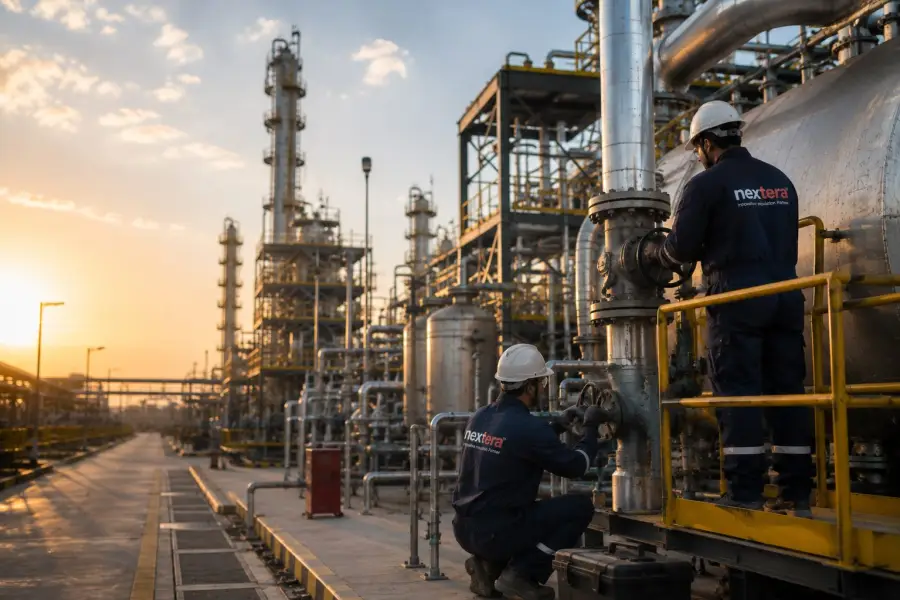
Nextera Insulations provides vapor barriers and moisture protection systems designed to help protect thermal insulation from water-vapor ingress and moisture accumulation.
In cold-service applications, maintaining effective vapor control is an important part of insulation system performance. A properly designed and sealed vapor barrier helps limit moisture movement into the insulation and supports the long-term effectiveness of the thermal insulation system.
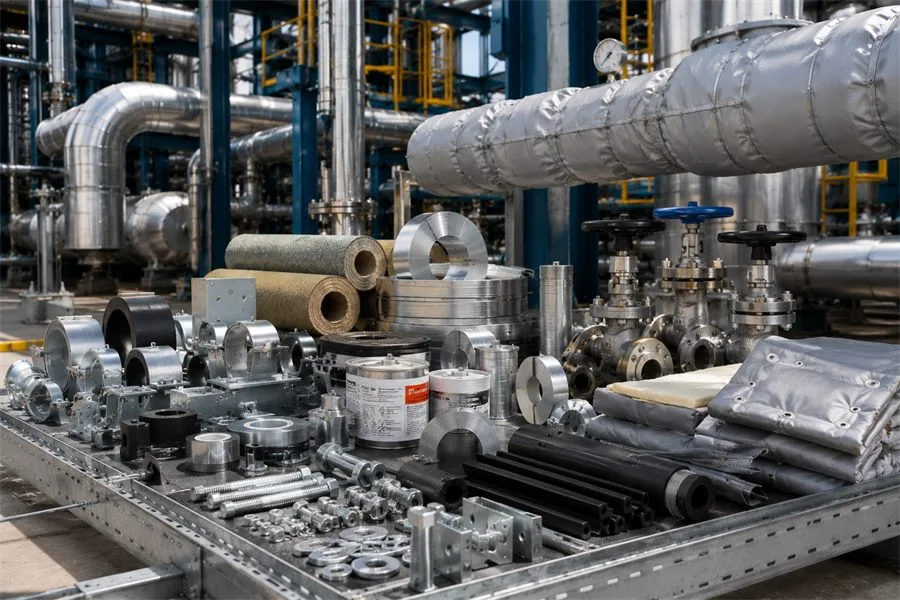
Nextera offers vapor-control solutions for different insulation assemblies, including ASJ / All-Service Jacket, multi-layer polymeric vapor barriers, butyl and self-adhesive vapor barriers, and vapor-barrier mastics.
Protecting Insulation from Moisture
Thermal insulation systems operating at low temperatures can be exposed to moisture from the surrounding environment.
When water vapor reaches a sufficiently cold surface, condensation can occur. Moisture accumulation within insulation can affect the condition and intended thermal performance of the system.
A vapor-control system helps address this risk by creating a continuous barrier against water-vapor movement.
Effective vapor protection is especially important around areas such as:
- Insulation joints
- Seams and overlaps
- Pipe supports
- Penetrations
- Terminations
- Valves and fittings
- Jacketing interfaces
- Complex insulation geometries
The vapor barrier should therefore be considered as an integral component of the overall cold insulation system.
Vapor Barrier Solutions
Nextera's vapor-control range covers different installation conditions and insulation configurations.
ASJ / All-Service Jacket
Vapor-retarder protection for pipe and HVAC insulation systems.
ASJ, or All-Service Jacket, is commonly used as a vapor-retarder facing for preformed pipe insulation.
It provides a finished outer surface while helping control vapor movement through the insulation assembly when joints, laps and closures are properly sealed.
ASJ systems are particularly relevant to indoor chilled-water and HVAC piping, including compatible preformed fiberglass pipe insulation.
Multi-Layer Polymeric Vapor Barrier
High-barrier vapor control for demanding cold and cryogenic applications.
Multi-layer polymeric membranes are used where a very low water-vapor transmission rate is required.
These systems are particularly relevant to cold and cryogenic insulation, where moisture ingress can have a significant impact on insulation performance.
Depending on the construction, polymeric membranes may incorporate multiple layers and reinforcement to provide the required combination of vapor resistance, flexibility and mechanical durability.
Applications include:
- Cryogenic piping
- Cold-service equipment
- Industrial cold insulation
- High-humidity environments
- Systems requiring high levels of vapor control
Seam design, puncture resistance and material compatibility are important when specifying a polymeric vapor barrier.
Butyl & Self-Adhesive Vapor Barriers
Flexible sealing solutions for joints, penetrations and insulation details.
Butyl-based and self-adhesive vapor barrier systems provide flexible vapor-control solutions for areas that require detailed sealing.
They can be used around seams, overlaps, penetrations, terminations and vapor-stop details, subject to the selected product and system specification.
Their flexibility makes them suitable for applications where the vapor barrier needs to follow complex insulation details and maintain continuity.
Typical applications include:
- Cold insulation
- Jacketing overlaps
- Pipe penetrations
- Terminations
- Vapor-stop details
- Complex insulation joints
Adhesion, temperature suitability, substrate compatibility and environmental exposure should be considered during product selection.
Vapor-Barrier Mastic
Field-applied vapor protection for irregular surfaces and complex geometries.
Vapor-barrier mastic is a field-applied coating used to create a continuous moisture-resistant layer over suitable insulation systems.
Unlike sheet membranes, mastic can be applied around irregular shapes and difficult-to-detail areas where achieving continuous coverage with a rigid or sheet-based material may be challenging.
Typical applications include:
- Valves
- Fittings
- Equipment
- Penetrations
- Termination points
- Irregular insulation surfaces
- Vapor-barrier repairs
- Complex geometries
Where specified, reinforcing membrane can be incorporated into the mastic system. Application requirements may include appropriate dry-film thickness, reinforcement, curing and service-temperature considerations.
Vapor Barriers for Cold Insulation
Cold insulation requires particular attention to vapor control because the temperature difference between the insulated surface and surrounding environment can create conditions for moisture migration and condensation.
A vapor barrier should form a continuous sealed envelope around the cold insulation system.
This includes maintaining continuity at:
- Longitudinal joints
- Circumferential joints
- Overlaps
- Supports
- Penetrations
- Terminations
- Fittings
Any discontinuity in the vapor-control layer can provide a pathway for moisture ingress.
Cryogenic Vapor Barrier Systems
Cryogenic insulation systems require careful moisture-control design because even small weaknesses in the vapor barrier can become important over the operating life of the system.
For cryogenic and very-low-temperature applications, vapor-barrier selection should consider:
- Very low vapor permeance
- Continuous sealed joints
- Puncture resistance
- Membrane flexibility
- Adhesive compatibility
- Insulation compatibility
- Temperature suitability
- Detailed penetration and termination design
A robust vapor barrier system helps maintain the separation between the cold insulation environment and surrounding moisture-laden air.
HVAC & Chilled-Water Vapor Protection
Vapor control is also important in HVAC and chilled-water insulation systems.
Materials such as FSK, foil and ASJ facings can provide vapor-retarder functionality when the insulation system is correctly designed and the relevant seams, laps and penetrations are properly sealed.
This makes vapor-retarder systems relevant to:
- Chilled-water piping
- HVAC piping
- Indoor pipe insulation
- Duct insulation
- Equipment insulation
Vapor Barrier Protection for Industrial Insulation
Industrial insulation systems often contain components that make continuous vapor control more challenging.
Valves, fittings, supports, penetrations and termination points require careful detailing to prevent breaks in the vapor-control layer.
Nextera's range provides solutions for both large-area vapor protection and detailed sealing, allowing the vapor-control approach to be matched to the geometry and requirements of the insulation system.
Vapor Barriers and Insulation Jacketing
Vapor barriers and jacketing systems work together within many industrial insulation assemblies.
The vapor-control layer needs to remain protected during installation and throughout maintenance activities. Mechanical damage to the membrane can compromise its continuity.
For metal jacketing systems, moisture-barrier arrangements can be incorporated into the jacketing assembly. The appropriate construction should follow the project specification and selected jacketing system.
For outdoor insulation, the vapor barrier is generally protected by a suitable weatherproof jacketing or cladding system.
How to Choose a Vapor Barrier
The right vapor barrier depends on the complete insulation system, not simply the product category.
Operating Conditions
Consider the operating temperature and conditions of the insulated pipe, equipment or system.
Vapor Control Requirement
Cold and cryogenic systems may require very low vapor permeance to restrict moisture ingress.
Insulation Material
The vapor barrier should be compatible with the selected insulation and its facing or jacketing arrangement.
Joint & Seam Configuration
The system should allow joints, overlaps, penetrations and terminations to be properly sealed.
Mechanical Resistance
Puncture and handling resistance become important during insulation installation and jacketing.
Substrate Compatibility
Adhesives, tapes and mastics should be compatible with the vapor barrier and the substrate.
Environmental Exposure
Indoor and outdoor applications may have different requirements for moisture, UV and weather resistance.
Project Specification
Industrial and commercial projects may define specific requirements for vapor performance, temperature, fire performance, adhesion, compatibility and installation.
Installation & System Integrity
The performance of a vapor barrier depends heavily on correct installation.
Surfaces should be properly prepared before applying membranes, tapes, adhesives or mastics. They should be clean, dry and free from oil, dust, condensation and loose material.
Particular attention should be given to:
Joints → Overlaps → Penetrations → Supports → Terminations → Jacketing interfaces
Compatible sealing materials should be used throughout the system.
During jacketing installation, membranes should also be protected from puncture and mechanical damage.
The completed system should follow the approved insulation specification, manufacturer instructions and applicable project requirements.
Applications
Nextera vapor barrier and moisture protection solutions are suitable for consideration in:
- Cold insulation systems
- Cryogenic insulation
- Chilled-water piping
- HVAC insulation
- Industrial pipe insulation
- Process equipment insulation
- Valve and fitting insulation
- Insulation jacketing systems
- Vapor-control assemblies
- Outdoor insulation systems
- Moisture protection applications
Industries
Vapor barrier systems are used across insulation applications in:
- Oil & Gas
- Petrochemical
- LNG & Cryogenic Facilities
- Power Generation
- Chemical Processing
- Industrial Manufacturing
- HVAC & Building Services
- Industrial Infrastructure
Why Choose Nextera Insulations?
Nextera Insulations supplies thermal insulation, jacketing & cladding, vapor barriers and insulation ancillaries for industrial and building applications.
Our vapor-control solutions cover different requirements, from vapor-retarder facings and high-barrier membranes to flexible sealing systems and field-applied mastics.
The focus is on selecting the appropriate vapor-control solution according to the insulation material, operating conditions, vapor-control requirements, substrate, jacketing arrangement and project specification.
For technical projects, product selection should be confirmed against the applicable technical documentation before specification and installation.
Get the Right Vapor Barrier Solution
Need vapor barrier or moisture protection for cold, cryogenic, HVAC or industrial insulation? Nextera Insulations can help identify a suitable vapor barrier, vapor-retarder facing, polymeric membrane, butyl sealing system or vapor-barrier mastic according to your insulation system and project requirements.
Need Vapour Barriers priced?
Send the specification or the bill of quantities - pricing and lead times come back within one business day, datasheets on request.
Questions about Vapour Barriers
Not sure this is the right material?
Tell us the operating temperature, the service and the space you have. Our engineers will tell you what fits - even when the answer is a different product.