
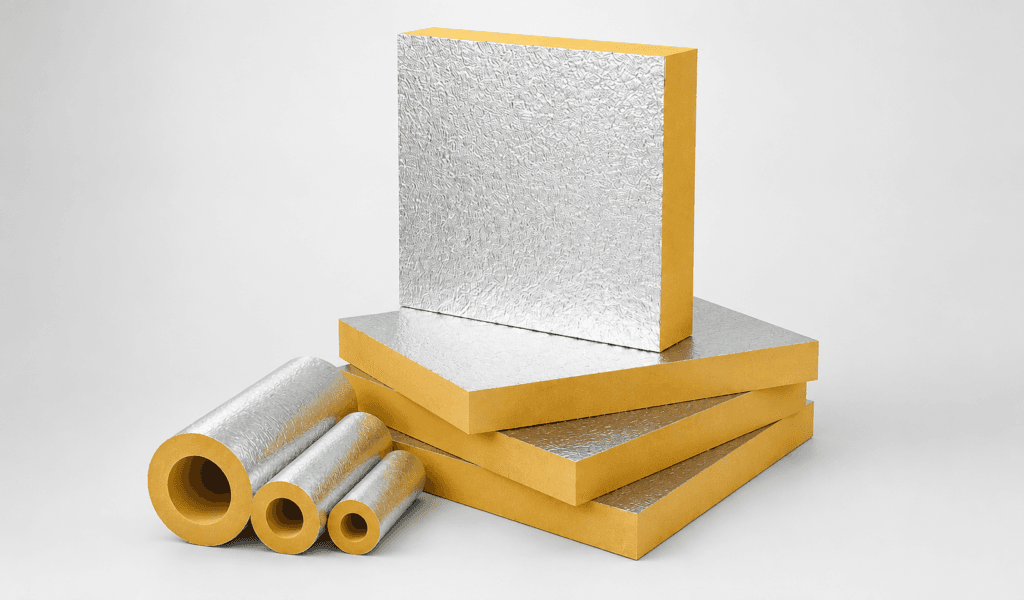
Modern buildings and industrial facilities demand insulation materials that offer excellent thermal performance, space efficiency, fire safety, and long-term durability. Phenolic insulation has become one of the most effective insulation solutions for HVAC systems, chilled water piping, ductwork, and commercial buildings because it delivers high thermal performance with a relatively thin insulation thickness.
Used across commercial buildings, hospitals, airports, hotels, data centres, industrial plants, and district cooling systems, phenolic insulation helps improve energy efficiency while supporting modern building performance requirements.
This guide explains how phenolic insulation works, its key benefits, common applications, material properties, and important specification considerations.
What is Phenolic Insulation?
Phenolic insulation is a rigid closed-cell foam insulation manufactured using phenolic resin technology. It is engineered to provide excellent thermal insulation while maintaining low smoke emission, good fire performance, and high moisture resistance.
Unlike conventional insulation materials, phenolic insulation achieves very low thermal conductivity, allowing engineers to specify thinner insulation while maintaining the required thermal performance.
Phenolic insulation is commonly supplied as:
- Pipe Sections
- Duct Panels
- Flat Boards
- Preformed Sections
- Insulated Duct Systems
It is widely used for both commercial HVAC installations and industrial insulation projects.
Why Choose Phenolic Insulation?
Phenolic insulation offers an excellent combination of thermal efficiency, fire performance, and space-saving design.
Its closed-cell structure helps minimise heat transfer while reducing moisture absorption, making it suitable for demanding operating environments.
Key Benefits of Phenolic Insulation
Excellent Thermal Performance
One of the biggest advantages of phenolic insulation is its very low thermal conductivity.
This helps:
- Reduce heat loss
- Improve cooling efficiency
- Lower energy consumption
- Maintain stable operating temperatures
- Improve overall HVAC performance
Because of its excellent insulation value, thinner insulation can often achieve the same thermal performance compared to some conventional insulation materials.
Space-Saving Design
Mechanical rooms, ceiling voids, and service shafts often have limited installation space.
Phenolic insulation requires less thickness while maintaining high insulation performance, making it an ideal solution where space is limited.
Moisture Resistance
The closed-cell structure provides excellent resistance to moisture ingress.
This helps:
- Reduce condensation
- Protect chilled water systems
- Improve long-term insulation performance
- Reduce maintenance requirements
Proper installation and vapour sealing remain essential for achieving the best system performance.
Fire Performance
Fire safety is an important consideration for modern building services.
Phenolic insulation is widely selected because it offers:
- Low flame spread characteristics
- Low smoke generation
- Improved fire performance compared with many traditional insulation materials
Material selection should always comply with applicable project specifications and local fire regulations.
Lightweight Construction
Phenolic insulation is lightweight, making transportation, handling, and installation easier while reducing structural loading on building services.
Long Service Life
When properly installed, phenolic insulation provides reliable long-term thermal performance with minimal maintenance.
Its dimensional stability helps maintain insulation effectiveness throughout the service life of the system.
Common Applications
Phenolic insulation is suitable for a wide range of commercial and industrial applications.
HVAC Ductwork
Phenolic duct insulation helps reduce heat gain and heat loss while improving the energy efficiency of air distribution systems.
Chilled Water Pipes
Phenolic pipe insulation is commonly used on chilled water systems to minimise condensation and maintain low operating temperatures.
Refrigeration Systems
Cold storage facilities and refrigeration systems use phenolic insulation to maintain stable temperatures and improve energy efficiency.
Commercial Buildings
Widely installed in:
- Office Buildings
- Hotels
- Shopping Centres
- Hospitals
- Educational Institutions
- Airports
Industrial Facilities
Suitable for:
- Manufacturing Plants
- Process Industries
- Utility Buildings
- Mechanical Rooms
- Equipment Insulation
District Cooling Systems
Phenolic insulation performs well in district cooling networks where thermal efficiency and condensation control are critical.
Technical Characteristics
Typical performance characteristics of phenolic insulation include:
- Closed-cell foam structure
- Low thermal conductivity
- High moisture resistance
- Lightweight construction
- Excellent dimensional stability
- Good compressive strength
- Low smoke generation
- Long service life
Actual performance values may vary depending on the manufacturer and product specification.
Phenolic Insulation vs Other Insulation Material
| Property | Phenolic Insulation | Mineral Wool | PIR Insulation |
| Thermal Performance | Excellent | Good | Excellent |
| Moisture Resistance | Excellent | Moderate | Excellent |
| Weight | Lightweight | Heavier | Lightweight |
| Space Saving | Excellent | Moderate | Good |
| Fire Performance | Excellent | Excellent | Good |
| HVAC Applications | Excellent | Good | Excellent |
Material selection should always be based on project requirements, operating temperatures, fire performance, and applicable standards.
Design Considerations
When selecting phenolic insulation, engineers should consider:
- Operating temperature
- Pipe or duct size
- Required insulation thickness
- Vapour barrier requirements
- Fire performance
- Moisture protection
- Mechanical strength
- Installation environment
- Applicable project specifications
Selecting the correct insulation thickness is essential to prevent condensation and achieve the desired thermal performance.
Installation Best Practices
Proper installation significantly influences insulation performance.
Recommended practices include:
- Prepare clean pipe and duct surfaces
- Use compatible adhesives where required
- Seal all joints properly
- Maintain continuous vapour barriers
- Protect external insulation with suitable cladding where necessary
- Inspect completed installations before commissioning
Professional installation helps maximise energy efficiency and long-term durability.
Why Choose Nextera Insulations?
Nextera Insulations supplies high-quality insulation solutions for commercial, industrial, and infrastructure projects across the Middle East and Africa.
Our experienced technical team assists consultants, contractors, and project owners in selecting the right insulation products for HVAC systems, chilled water networks, industrial piping, ductwork, and process equipment.
We provide:
- High-performance insulation solutions
- Technical product support
- Material selection guidance
- Project-specific recommendations
- Reliable supply for commercial and industrial projects
- Products manufactured to recognised international quality standards
Our goal is to deliver insulation systems that improve energy efficiency, reduce operating costs, and provide long-term performance.
Frequently Asked Questions
What is phenolic insulation used for?
Phenolic insulation is commonly used for HVAC ductwork, chilled water piping, refrigeration systems, industrial equipment, and commercial building insulation where high thermal performance is required.
Why is phenolic insulation popular for HVAC systems?
Its low thermal conductivity allows excellent insulation performance with reduced thickness, making it ideal for space-constrained HVAC installations.
Does phenolic insulation resist moisture?
Yes. Its closed-cell structure provides excellent resistance to moisture absorption, helping reduce condensation when properly installed with suitable vapour sealing.
Is phenolic insulation suitable for industrial applications?
Yes. Phenolic insulation is widely used in commercial buildings, industrial facilities, district cooling systems, and process industries because of its thermal efficiency and durability.
How long does phenolic insulation last?
With proper installation and maintenance, phenolic insulation provides reliable long-term performance throughout the service life of the insulation system.
Conclusion
Phenolic insulation has become one of the preferred insulation materials for modern HVAC and industrial applications because it combines excellent thermal performance, moisture resistance, space-saving design, and reliable long-term durability.
Whether the application involves chilled water piping, HVAC ductwork, refrigeration systems, commercial buildings, or industrial facilities, selecting the correct insulation solution contributes to improved energy efficiency and reduced operating costs.
At Nextera Insulations, we supply high-quality insulation solutions designed to meet the performance requirements of commercial, industrial, and infrastructure projects. Our experienced team can help you select the right insulation products for your project while providing technical guidance from product selection through installation support.