
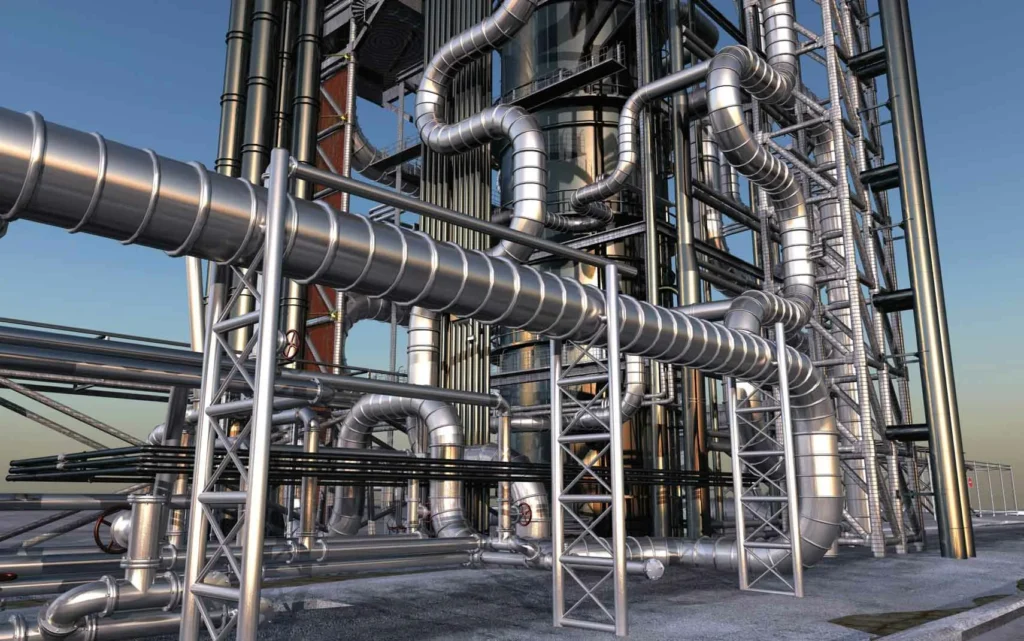
In industrial sectors such as oil & gas, power generation, and petrochemical processing, material failure is not an option. Extreme heat, corrosive atmospheres, and fire risk demand cladding materials that deliver long-term reliability. Aluminized steel cladding has become a preferred choice for protecting insulated pipes, equipment, and structures operating under these harsh conditions.
This article explains what aluminized steel cladding is, how it performs, and why it is widely specified in demanding industrial environments.
What Is Aluminized Steel Cladding?
Aluminized steel cladding consists of a carbon steel substrate coated on both sides with pure aluminium. This aluminium layer forms a naturally protective oxide film that shields the steel from corrosion, oxidation, and high-temperature degradation.
Unlike painted or galvanized steel, aluminized steel provides stable performance at elevated temperatures while maintaining mechanical strength over long service periods.
Corrosion Resistance in Industrial and Marine Conditions
Industrial installations are exposed to moisture, chemicals, and atmospheric contaminants. The aluminium coating on aluminized steel reacts with oxygen to form a hard, passive oxide layer that:
- Protects the steel surface and cut edges
- Performs reliably in urban, industrial, and marine environments
- Reduces the risk of corrosion under insulation (CUI)
This makes aluminized steel suitable for long-term industrial applications where corrosion resistance is critical.
High-Temperature and Fire Performance
Fire safety is a key consideration in energy and process industries. Aluminized steel cladding offers inherent passive fire resistance. At elevated temperatures, the aluminium coating supports the steel substrate, and at extreme heat exposure, a reinforced alloy layer forms on the surface.
This behaviour helps maintain protection during fire scenarios, contributing to structural integrity and operational safety.
Thermal and Light Reflectivity
Aluminized steel cladding provides high thermal and light reflectivity, helping to:
- Reduce heat radiation from hot surfaces
- Protect insulation systems from thermal stress
- Improve energy efficiency in insulated piping and equipment
This reflective performance remains effective even after prolonged exposure to industrial operating conditions.
Industrial Applications
Aluminized steel cladding is commonly used as jacketing and protective cladding in:
- Oil refineries and petrochemical plants
- Power generation facilities
- LNG terminals and storage installations
- Industrial pipelines and vessels
In controlled conditions, it is also suitable for applications requiring compliance with food-contact regulations.
Fabrication and Installation Benefits
From an execution perspective, aluminized steel cladding offers good formability and can be bent, folded, corrugated, and roll-formed. Availability in multiple thicknesses allows engineers to select appropriate configurations for different insulation systems.
Standards and Industry Acceptance
Aluminized steel cladding is produced in accordance with internationally recognised ASTM specifications, ensuring consistent quality, corrosion resistance, and performance under high-temperature conditions. It is widely recommended for insulated pipe jacketing where both corrosion and fire risks are present.
Important Technical Note
Material performance may vary depending on grade, coating mass, operating temperature, and installation conditions. Specifications should always be reviewed based on individual project requirements.
Why Choose Nextera for Industrial Cladding Solutions?
Nextera provides engineered insulation and cladding solutions designed around real operating conditions. With a focus on performance, safety, and durability, Nextera supports industrial projects with reliable, standards-compliant material solutions.
Conclusion
Aluminized steel cladding offers a balanced combination of corrosion resistance, fire performance, and thermal reflectivity. For industries operating in harsh environments, it remains a dependable solution for long-term insulation and asset protection.
Frequently Asked Questions
1. What is aluminized steel cladding used for?
Aluminized steel cladding is used to protect insulated pipes, vessels, and equipment in industrial environments. It acts as an external jacketing material that shields insulation systems from corrosion, weather exposure, mechanical damage, and high temperatures.
2. How does aluminized steel differ from galvanized steel?
Unlike galvanized steel, which is coated with zinc, aluminized steel is coated with pure aluminium. This aluminium layer provides superior performance at high temperatures, better oxidation resistance, and improved fire behavior, making it more suitable for demanding industrial and energy applications.
3. Is aluminized steel cladding suitable for high-temperature applications?
Yes. Aluminized steel cladding is specifically designed to perform in high-temperature environments. The aluminium coating remains stable at elevated temperatures and helps protect the steel substrate from oxidation and thermal degradation.
4. Does aluminized steel cladding help prevent corrosion under insulation (CUI)?
Aluminized steel cladding reduces the risk of corrosion under insulation by forming a protective oxide layer that resists moisture and atmospheric contaminants. Proper installation and sealing further enhance CUI protection.
5. How does aluminized steel perform in marine or coastal environments?
Aluminized steel performs well in marine and coastal environments due to the aluminium coating’s resistance to salt spray and humid conditions. This makes it suitable for offshore facilities, coastal plants, and industrial sites exposed to aggressive atmospheres.
6. Is aluminized steel cladding fire-resistant?
Aluminized steel cladding offers passive fire resistance. During fire exposure, the aluminium coating supports the steel and forms a reinforced alloy layer that helps maintain protection and structural integrity for a longer duration.
7. Does aluminized steel cladding improve energy efficiency?
Yes. Its high thermal and light reflectivity reduces radiant heat loss from hot surfaces and protects insulation from thermal stress, contributing to improved energy efficiency in industrial systems.
8. Can aluminized steel cladding be fabricated easily on site?
Aluminized steel has good formability and can be bent, rolled, corrugated, and cut using standard fabrication methods. It is available in multiple thicknesses to suit different insulation and mechanical protection requirements.
9. What standards apply to aluminized steel cladding?
Aluminized steel cladding is typically manufactured in accordance with ASTM standards, ensuring consistent coating quality, corrosion resistance, and high-temperature performance suitable for industrial use.
10. Is aluminized steel cladding suitable for food or pharmaceutical facilities?
In controlled environments and when specified correctly, aluminized steel cladding can be used in applications that require compliance with food-contact or hygiene-related standards. Project-specific requirements should always be reviewed.
11. What factors affect the performance of aluminized steel cladding?
Performance depends on factors such as steel grade, aluminium coating mass, operating temperature, environmental exposure, and installation quality. Proper specification and installation are essential for long-term durability.
12. Why choose Nextera for aluminized steel cladding solutions?
Nextera delivers engineered cladding and insulation solutions tailored to real industrial operating conditions. With a focus on safety, performance, and standards compliance, Nextera supports reliable long-term asset protection.