
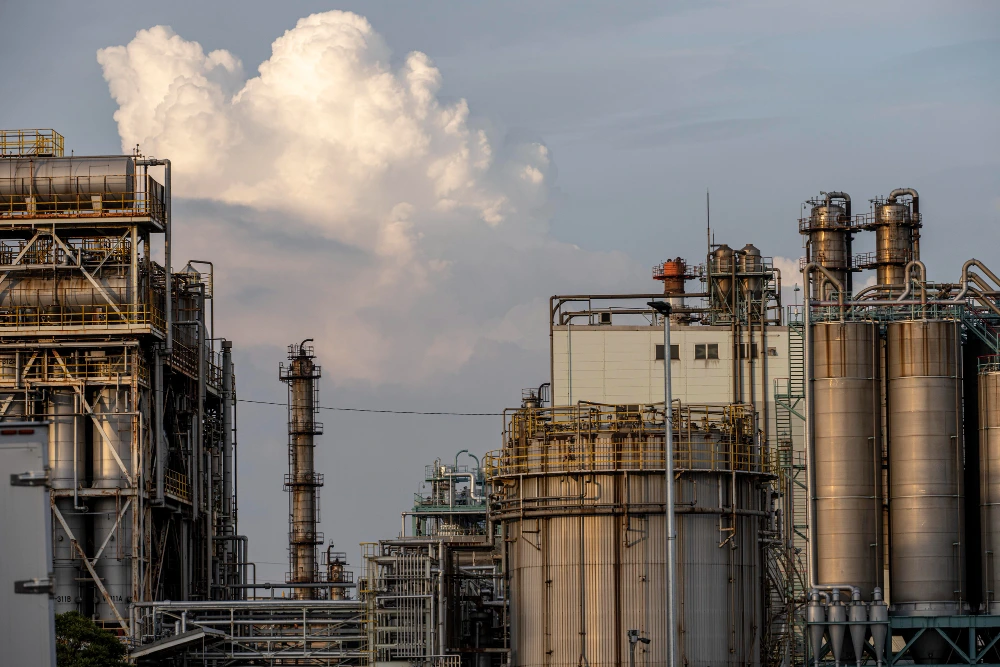
Industrial insulation systems face multiple challenges, including fire exposure, corrosion, and long-term durability issues. Selecting the right cladding material plays a critical role in protecting assets, insulation, and personnel. Aluminized steel cladding — a material combining the structural strength of steel with the corrosion resistance of aluminium — is increasingly specified where fire safety and high-temperature performance are essential.
This article explains why aluminized steel is widely used for fire-safe industrial insulation systems.
Understanding Aluminized Steel
Aluminized steel is produced by coating carbon steel with aluminium through a hot-dip process, forming a metallurgical bond between the steel substrate and the aluminium layer. This combination allows the material to benefit from:
- Mechanical strength and structural stability from steel
- Oxidation and corrosion resistance from aluminium
- Formation of a stable aluminium oxide protective layer
In many industrial insulation applications, Type 2 aluminized steel with a pure aluminium coating is used. This type of coating provides enhanced corrosion resistance, particularly in harsh industrial and marine environments.
Fire Risks in Industrial Insulation Systems
Facilities such as refineries, petrochemical plants, and gas processing units operate under conditions where fire risk is unavoidable. High temperatures, flammable substances, and aggressive operating environments require insulation systems that maintain performance even under extreme conditions.
Conventional cladding materials may degrade, peel, or lose protective properties when exposed to fire or elevated temperatures, increasing safety risks and maintenance requirements.
Passive Fire Protection with Aluminized Steel
Aluminized steel cladding provides passive fire resistance without relying on organic coatings or additional treatments. During exposure to high temperatures:
- The steel core maintains mechanical strength
- The aluminium coating forms a stable oxide layer
- Surface stability is maintained even during thermal exposure
This combination improves the overall durability of insulation systems and helps maintain protective performance during fire incidents.
Performance at Elevated Operating Temperatures
Industrial piping and process equipment often operate under continuous thermal exposure. Aluminized steel cladding performs reliably in such environments because the aluminium coating protects the steel substrate from oxidation and scaling at elevated temperatures.
Another advantage is the high thermal and light reflectivity of aluminium surfaces, which helps reduce heat absorption and limits the impact of radiant heat from nearby equipment or fire exposure.
Even after long-term service and ageing, aluminized steel retains significant reflective properties, supporting insulation efficiency and thermal protection.
Corrosion Protection in Aggressive Environments
Corrosion under insulation (CUI) remains one of the major challenges in industrial facilities. Moisture, chemicals, and salt-laden environments accelerate corrosion in many conventional materials.
Aluminized steel cladding provides effective protection through:
- Formation of a hard and stable aluminium oxide layer
- Resistance to corrosion in industrial, urban, and marine environments
- Protection that extends to cut edges of the steel substrate
This natural protective mechanism supports long-term durability while reducing maintenance requirements.
In chloride-rich environments, such as coastal or offshore installations, aluminized steel can offer improved resistance to chloride-related degradation compared with some commonly used metallic materials.
Applications Where Fire-Safe Cladding Is Critical
Due to its heat resistance and corrosion protection, aluminized steel cladding is widely used in:
- Oil and gas facilities
- Petrochemical and chemical processing plants
- LNG terminals and storage systems
- Power generation plants
- Industrial heating installations
These environments require materials capable of maintaining performance under high temperatures, corrosive atmospheres, and fire-risk conditions.
Fabrication and Installation Advantages
Aluminized steel cladding can be fabricated using standard sheet-metal processes and formed into various insulation jacketing profiles such as:
- Corrugated sheets
- Roll-formed cladding
- Custom insulation jackets
The steel substrate provides mechanical strength and durability, while the aluminium coating ensures long-term surface protection.
Standards and Specification Confidence
Aluminized steel cladding is typically manufactured according to ASTM A463/A463M – Standard Specification for Steel Sheet, Aluminum-Coated, by the Hot-Dip Process.
This internationally recognised standard defines:
- Coating types and coating weight
- Mechanical and chemical properties
- Manufacturing and quality requirements
Compliance with ASTM A463/A463M ensures consistent performance and reliability in demanding industrial applications.
Important Technical Note
Material performance may vary depending on coating type, coating thickness, operating temperature, environmental exposure, and installation design. Engineering specifications should always be evaluated based on project-specific requirements and applicable standards such as ASTM A463/A463M.
Nextera’s Approach to Fire-Safe Cladding Systems
Nextera supports industrial clients by delivering performance-driven insulation and cladding solutions. By focusing on material behaviour, corrosion protection, and high-temperature performance, Nextera helps ensure reliable insulation systems for critical industrial infrastructure.
Conclusion
Aluminized steel combines the strength and fire resistance of steel with the corrosion protection and thermal reflectivity of aluminium, making it a reliable cladding material for industrial insulation systems. When manufactured according to ASTM A463/A463M standards, it offers dependable performance in fire-prone and high-temperature environments.
For industries where safety, durability, and long-term reliability are essential, aluminized steel cladding remains a preferred choice for modern fire-safe insulation systems.
Frequently Asked Questions
1. What is aluminized steel cladding?
Aluminized steel cladding is a material made by coating carbon steel with aluminium through a hot-dip process. This combination provides the mechanical strength of steel and the corrosion and heat resistance of aluminium, making it suitable for industrial insulation systems.
2. Why is aluminized steel used for fire-safe insulation systems?
Aluminized steel is preferred for fire-safe insulation systems because it offers high-temperature stability, oxidation resistance, and structural durability. The aluminium coating forms a protective oxide layer that helps maintain surface stability during heat exposure.
3. What is ASTM A463/A463M for aluminized steel?
ASTM A463/A463M is an international standard titled “Standard Specification for Steel Sheet, Aluminum-Coated, by the Hot-Dip Process.” It defines the requirements for coating thickness, chemical composition, and mechanical properties of aluminized steel used in industrial applications.
4. What is the difference between Type 1 and Type 2 aluminized steel?
ASTM A463/A463M specifies two types of aluminized steel:
- Type 1: Aluminium-silicon alloy coating designed mainly for high-temperature applications.
- Type 2: Pure aluminium coating primarily used for corrosion resistance in industrial and marine environments.
Both types are used in insulation systems depending on the operating conditions.
5. How does aluminized steel resist corrosion?
Aluminized steel resists corrosion through the formation of a stable aluminium oxide layer on the surface. This protective layer prevents moisture and oxygen from attacking the steel substrate and also helps protect exposed cut edges.
6. Is aluminized steel suitable for marine or coastal environments?
Yes. Aluminized steel performs well in marine, industrial, and urban environments due to its aluminium oxide protective layer, which provides long-term corrosion resistance even in chloride-rich conditions.
7. Where is aluminized steel cladding commonly used?
Aluminized steel cladding is widely used in industries such as:
- Oil and gas facilities
- Petrochemical plants
- LNG terminals
- Power generation plants
- Industrial heating and processing systems
These environments require materials that can withstand heat, corrosion, and fire risk.
8. What are the advantages of aluminized steel cladding over painted steel?
Compared with painted or polymer-coated materials, aluminized steel cladding offers:
- Better high-temperature performance
- Improved corrosion resistance
- Longer service life with reduced maintenance
- Better thermal reflectivity
These properties make it suitable for demanding industrial insulation systems.