
As industrial infrastructure and commercial developments continue to expand across the Middle East, fire safety and thermal efficiency have become essential considerations in modern construction. Today’s projects require insulation materials that not only improve energy performance but also provide long-term durability, moisture resistance, and reliable fire protection.
Among the advanced insulation solutions available today, perlite insulation has emerged as a preferred choice for industrial and commercial applications due to its non-combustible nature, lightweight structure, and excellent thermal performance.
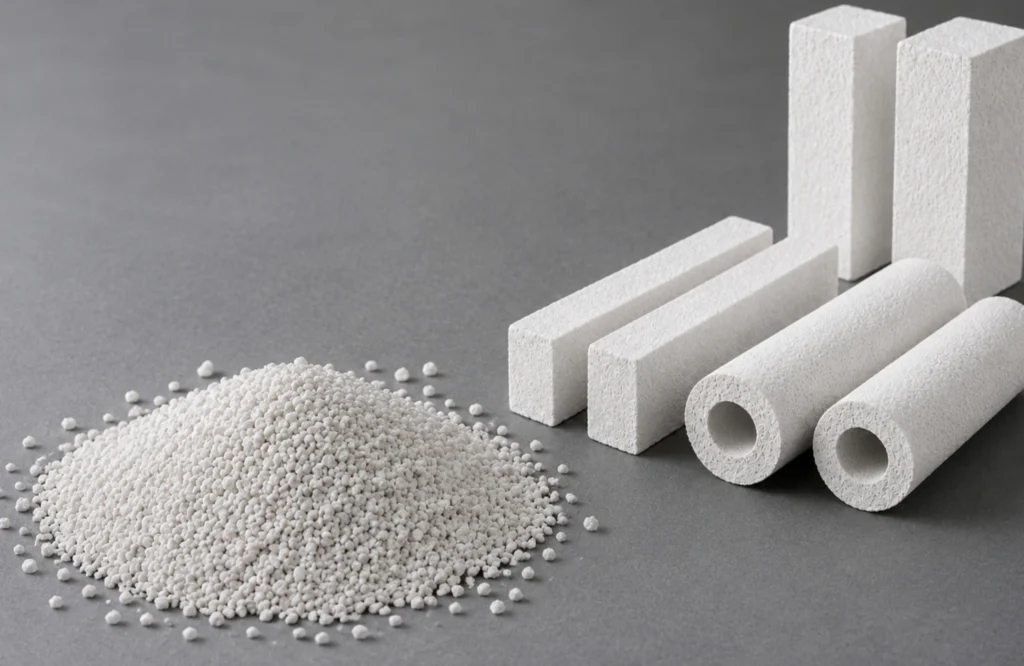
At Nextera Insulation, advanced perlite insulation products are manufactured using expanded perlite combined with inorganic binders and reinforcing materials to deliver high-performance insulation systems for demanding environments across the Middle East and Africa.
Why Fire-Resistant Insulation Matters
In industrial facilities, warehouses, manufacturing units, and commercial buildings, insulation materials are often exposed to high temperatures and challenging operating conditions. Selecting the wrong insulation system can increase fire risks, reduce energy efficiency, and impact long-term structural safety.
Fire-resistant insulation materials help:
- Slow the spread of fire
- Improve occupant and equipment safety
- Protect structural components
- Support compliance with fire safety standards
- Reduce operational risks in high-temperature environments
For industries where fire safety cannot be compromised, choosing a non-combustible insulation material is critical.
What Makes Perlite Insulation Different?
Perlite is a naturally occurring volcanic mineral with a high silica content. When heated at controlled high temperatures, the moisture trapped inside the mineral rapidly vaporizes, causing the material to expand into a lightweight structure filled with microscopic air cells.
These trapped air pockets significantly reduce heat transfer, making expanded perlite an effective thermal insulation material.
Unlike many traditional insulation materials, perlite insulation is:
- Non-combustible
- Lightweight
- Chemically stable
- Moisture-resistant
- Environmentally safe
- Long-lasting
Because perlite remains stable even under extreme temperatures, it is widely used in industrial insulation systems requiring long-term fire protection and thermal efficiency.
Key Benefits of Perlite Insulation
Excellent Fire Resistance
One of the biggest advantages of perlite insulation is its non-combustible nature. It does not burn, melt, or release toxic smoke during fire exposure, making it suitable for projects where safety standards are critical.
This makes perlite insulation ideal for:
- Industrial plants
- Oil & gas facilities
- High-temperature processing units
- Commercial infrastructure
High Thermal Efficiency
Perlite insulation acts as an effective thermal barrier by minimizing heat transfer. This helps maintain stable indoor and operational temperatures while reducing the load on cooling systems.
The result includes:
- Lower energy consumption
- Reduced cooling costs
- Improved energy efficiency
- Better indoor comfort
Lightweight Yet Durable
Despite its lightweight structure, engineered perlite insulation systems provide excellent compressive strength and long-term dimensional stability.
This helps:
- Reduce structural load
- Simplify installation
- Improve durability
- Lower maintenance requirements
Moisture and Chemical Resistance
Perlite-based insulation systems are designed to resist moisture and maintain performance in humid and demanding industrial environments.
Unlike some traditional insulation materials, perlite does not easily degrade due to temperature fluctuations or chemical exposure.
Acoustic Insulation Performance
In addition to thermal insulation, perlite also helps reduce sound transmission, contributing to quieter and more comfortable indoor environments.
Applications Across Industries
Commercial Buildings
Perlite insulation is widely used in:
- Roof insulation systems
- Wall insulation panels
- HVAC systems
- Mechanical rooms
Its thermal and fire-resistant properties support safer and more energy-efficient building designs.
Oil & Gas Industry
Industrial facilities operating at high temperatures require insulation systems capable of maintaining performance under extreme conditions.
Perlite insulation is commonly used for:
- Pipelines
- Refineries
- Processing units
- Storage systems
- High-temperature equipment
Warehouses and Manufacturing Facilities
Large industrial spaces benefit from insulation systems that improve thermal stability while enhancing fire safety and reducing energy costs.
Cryogenic and Cold Storage Systems
Perlite insulation is also suitable for low-temperature applications, helping maintain thermal stability in:
- Cold storage facilities
- Refrigeration systems
- Cryogenic storage tanks
Why Perlite Performs Better Than Traditional Insulation Materials
Compared to many conventional insulation materials, perlite insulation offers stronger fire resistance, better thermal stability, and longer service life.
Traditional insulation materials may:
- Absorb moisture over time
- Lose performance under extreme temperatures
- Compress or degrade with long-term use
- Require more maintenance or replacement
Perlite insulation, on the other hand, maintains its structure and performance even in demanding industrial environments. Its non-combustible composition, moisture resistance, and durability make it a reliable solution for long-term insulation performance.
Sustainability and Environmental Benefits
Sustainability is becoming increasingly important in modern construction and industrial operations. Perlite insulation supports environmentally responsible building practices because it is:
- Naturally occurring
- Non-toxic
- Recyclable
- Long-lasting
- Energy efficient
By reducing energy consumption and improving thermal performance, perlite insulation contributes to lower carbon emissions and sustainable infrastructure development.
Why Choose Nextera Insulation?
Nextera Insulation provides advanced perlite insulation solutions designed for demanding industrial and commercial applications across the Middle East and Africa.
Key advantages include:
- Advanced manufacturing technology
- High-quality insulation systems
- Customized industrial solutions
- Consistent product performance
- Reliable regional supply capabilities
- Strong focus on safety and durability
With expertise in thermal insulation and fire-resistant materials, Nextera delivers solutions built for long-term performance in challenging environments.
Frequently Asked Questions
Is perlite insulation fireproof?
Perlite insulation is non-combustible and highly fire-resistant. It does not burn or release toxic gases when exposed to high temperatures.
Where is perlite insulation commonly used?
Perlite insulation is widely used in commercial buildings, industrial facilities, oil & gas plants, cold storage systems, and cryogenic applications.
Is perlite insulation suitable for high-temperature environments?
Yes. Perlite insulation maintains stability under extreme temperatures, making it suitable for industrial and high-temperature applications.
Does perlite insulation improve energy efficiency?
Yes. By reducing heat transfer, perlite insulation helps lower cooling loads and improve overall energy efficiency.
Conclusion
As modern infrastructure projects continue to prioritize fire safety, energy efficiency, and long-term durability, perlite insulation has become a reliable solution for industrial and commercial applications.
Its combination of thermal performance, non-combustibility, moisture resistance, and sustainability makes it an ideal choice for demanding environments.
With advanced manufacturing expertise and region-specific insulation solutions, Nextera Insulation helps businesses and developers achieve safer, more energy-efficient, and future-ready insulation systems.