
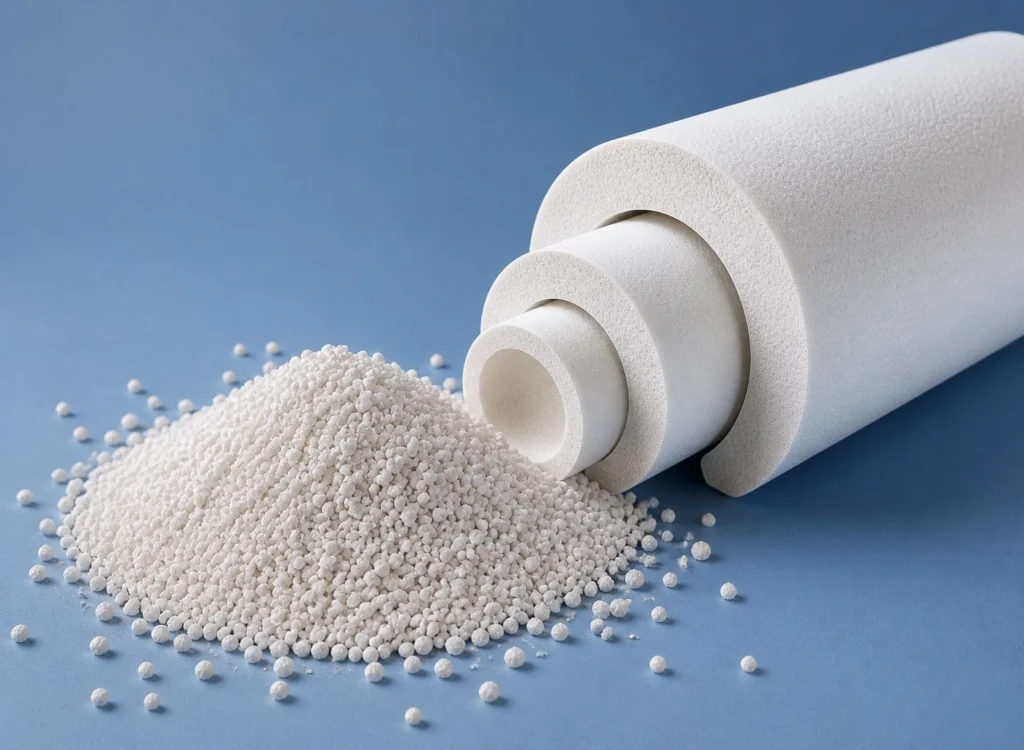
As construction standards continue to evolve across the Middle East and African region, the demand for high-performance insulation materials is increasing rapidly. Developers, contractors, and industrial planners are prioritizing solutions that deliver not only thermal efficiency but also fire safety, durability, and long-term sustainability.
One such advanced solution is perlite insulation, a material that combines natural mineral properties with engineered performance.
At Nextera Insulation, perlite-based insulation solutions are manufactured using advanced processes to meet the demanding requirements of construction, oil & gas, and industrial sectors across the Middle East and African region.
What Makes Perlite Insulation Unique?
Perlite is a naturally occurring amorphous volcanic glass formed through rapid cooling of lava. When heated at controlled high temperatures, the chemically bound moisture within the material vaporizes, causing it to expand significantly. This process creates a lightweight structure composed of millions of microscopic air cells.
These air-filled cells are critical to perlite’s performance. Since air has low thermal conductivity, it reduces heat transfer when trapped within a stable mineral structure. The result is a lightweight insulation material with excellent thermal resistance.
Nextera enhances this natural material by combining expanded perlite with inorganic binders and reinforcing fibers. This engineered composition produces a high-strength, asbestos-free, non-combustible, and moisture-resistant insulation product suitable for demanding applications.
Key Performance Benefits
1. Advanced Thermal Insulation
Perlite insulation offers low thermal conductivity, effectively reducing heat transfer in both high-temperature and low-temperature environments. In regions with extreme climates, this helps maintain stable indoor conditions and reduces reliance on mechanical cooling systems.
2. Fire Resistance & Safety
Perlite is classified as a non-combustible material, meaning it does not burn or emit toxic gases when exposed to high temperatures. This makes it highly suitable for applications where fire safety is a critical requirement, including industrial and high-occupancy buildings.
3. Lightweight with Structural Strength
Expanded perlite has a low bulk density, which reduces structural load. When engineered with binders and reinforcing materials, Nextera’s insulation products provide high compressive strength and structural stability, making them suitable for large-scale construction and industrial use.
4. Moisture Resistance & Chemical Stability
Perlite insulation is inorganic and chemically inert under most conditions. Engineered systems are designed to be moisture-resistant, ensuring consistent performance in humid environments. This makes it suitable for both indoor and outdoor applications across diverse climatic conditions.
5. Acoustic Insulatio
In addition to thermal performance, perlite provides effective sound absorption, helping reduce noise transmission in buildings and industrial facilities.
Applications Across Industries
Construction & Infrastructure
Perlite insulation is widely used in:
- Roof insulation systems
- Wall cavities and insulation panels
- Lightweight insulating concrete
Its ability to reduce heat gain contributes to improved energy efficiency in modern buildings across the Middle East and African region.
Oil & Gas Secto
In high-risk environments, insulation materials must withstand extreme temperatures and meet strict safety standards. Perlite insulation provides:
- Thermal stability
- Non-combustibility
- Long-term durability
This makes it suitable for pipelines, refineries, and processing facilities across the Middle East and African region.
Cryogenic Systems
Perlite is widely used as loose-fill insulation in cryogenic storage tanks and annular spaces, where it minimizes heat ingress and maintains extremely low temperatures in systems such as LNG storage and industrial gas handling.
Sustainability & Environmental Benefits
Sustainability is an increasingly important factor in material selection. Perlite insulation offers several environmental advantages:
- Derived from a naturally occurring mineral
- Non-toxic and safe for use
- Long service life, reducing material replacement
- Contributes to energy savings and reduced carbon footprint
Nextera’s manufacturing approach further enhances sustainability by delivering durable insulation solutions that improve long-term energy efficiency across the Middle East and African region.
Why Choose Nextera Insulation?
Nextera Insulation is a trusted manufacturer and supplier serving the Middle East and African region. Their perlite insulation solutions are designed to meet regional environmental conditions while adhering to international quality standards.
Key advantages include:
- Advanced manufacturing technology
- Consistent product performance
- Customized solutions for diverse industries
- Reliable supply across the Middle East and African region
Conclusion
Perlite insulation is more than a conventional insulation material—it is a comprehensive solution for improving thermal efficiency, enhancing fire safety, and supporting sustainable construction practices.
With Nextera Insulation’s expertise and advanced manufacturing capabilities, businesses and developers across the Middle East and African region can achieve reliable performance, improved energy efficiency, and long-term cost savings.
Frequently Asked Questions
1. What is perlite insulation used for?
Perlite insulation is used for thermal insulation, fire protection, and acoustic performance in construction and industrial applications. It is commonly applied in roof systems, wall insulation, pipelines, cryogenic storage tanks, and oil & gas facilities across the Middle East and African region.
2. What makes perlite a good insulation material
Perlite is an effective insulation material due to its low thermal conductivity, lightweight structure, and non-combustible nature. Its expanded form contains microscopic air cells that reduce heat transfer, making it highly efficient for both high-temperature and low-temperature environments.
3. Is perlite insulation fireproof?
Perlite insulation is non-combustible and has a Class A fire rating, meaning it does not burn or produce toxic fumes when exposed to high temperatures. This makes it suitable for applications where fire safety is critical.
4. Is perlite insulation waterproof?
Perlite insulation is moisture-resistant but not completely waterproof. Engineered perlite products, such as those manufactured by Nextera Insulation, are designed to resist moisture and maintain performance in humid conditions.
5. Where is perlite insulation commonly used?
Perlite insulation is widely used in:
- Construction (roof and wall insulation)
- Oil & gas industry (pipelines and processing units)
- Cryogenic systems (LNG storage tanks)
- Industrial facilities (thermal insulation for equipment)
6. What is the thermal conductivity of perlite insulation?
Perlite insulation typically has a low thermal conductivity ranging from 0.040 to 0.060 W/m·K, depending on density and product type. This allows it to effectively reduce heat transfer and improve energy efficiency.
7. Is perlite insulation environmentally friendly?
Yes, perlite is a natural, non-toxic, and inorganic material. It does not release harmful emissions and has a long service life, making it an environmentally responsible insulation solution.
8. Can perlite insulation be used in cryogenic applications?
Yes, perlite is widely used as loose-fill insulation in cryogenic storage tanks and annular spaces. It helps minimize heat ingress and maintain extremely low temperatures in applications such as LNG and industrial gas storage.
9. How does perlite compare to traditional insulation materials?
Compared to materials like fiberglass and foam, perlite offers:
- Better fire resistance (non-combustible)
- Higher durability and stability
- Resistance to moisture and chemical degradation
- Long-term performance without significant loss of efficiency
10. Why choose Nextera Insulation for perlite solutions?
Nextera Insulation provides high-performance perlite insulation products designed for the Middle East and African region. Their solutions offer:
- Low thermal conductivity
- Moisture resistance
- High compressive strength
- Reliable supply and consistent quality