
Industrial facilities rely on insulated pipelines to maintain process temperatures, improve energy efficiency, and protect personnel from extreme heat. However, insulation systems can make routine inspection of underlying equipment more difficult.
Inspection plugs provide a simple yet effective solution by allowing technicians to access inspection locations without removing insulation. These components support inspection techniques such as ultrasonic thickness testing, which is commonly used to evaluate pipeline integrity.
Why Inspection Access Is Important
Pipelines and pressure equipment operate under demanding conditions, including high temperatures, pressure variations, and exposure to corrosive environments. Over time, these conditions can lead to corrosion or material degradation.
Regular inspection helps engineers monitor the condition of these assets and detect potential issues before they become critical.
Inspection plugs enable technicians to access designated testing points quickly while maintaining the insulation system.
Supporting Accurate Thickness Measurements
Ultrasonic thickness testing requires consistent measurement locations in order to track corrosion trends. These locations are typically defined as Thickness Measurement Locations (TMLs).
Inspection plugs allow technicians to return to the same testing points during each inspection cycle. This consistency ensures that engineers can accurately monitor corrosion rates and evaluate equipment condition over time.
Reliable inspection data supports better maintenance planning and improves overall operational safety.
Key Design Elements of Effective Inspection Plugs
The effectiveness of an inspection plug depends on several design factors that ensure durability and protection.
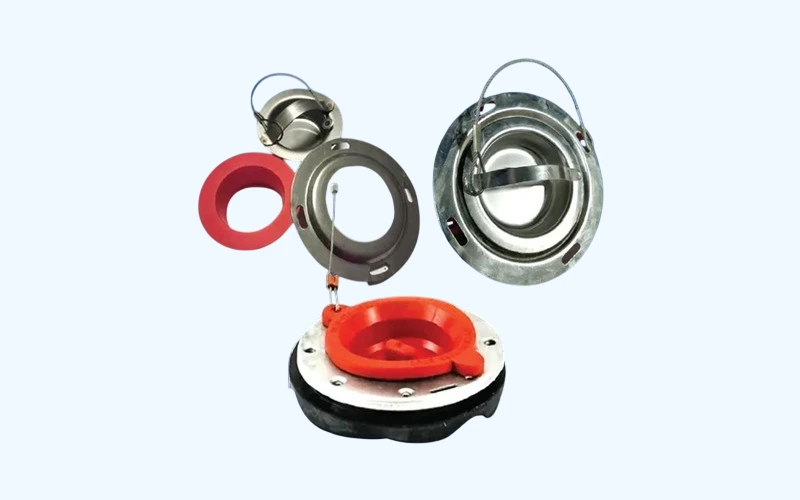
Sealing material
Elastomer seals such as EPDM or silicone help create a watertight barrier that prevents moisture from entering the insulation system.
Protective cap
A metal cap provides additional protection against environmental exposure and mechanical damage.
Retention features
Components such as lanyards help keep the cap attached during inspection activities, reducing the risk of losing parts.
Together, these design features help maintain the integrity of both the insulation and the inspection access point.
Reducing the Risk of Corrosion Under Insulation
Corrosion under insulation remains a major maintenance concern in many industries. Because corrosion develops beneath insulation layers, it may remain undetected until significant damage occurs.
Inspection plugs support corrosion monitoring programs by enabling routine inspection access without damaging the insulation system.
Regular inspection allows maintenance teams to detect corrosion early and take corrective action before failures occur.
Applications Across Industrial Sectors
Inspection plugs are used in many industries where insulated piping systems are common.
Typical sectors include:
- Oil and gas processing
- Petrochemical manufacturing
- Power generation facilities
- LNG terminals
- Chemical plants
In these environments, inspection plugs support safe and efficient asset management.
Nextera’s Commitment to Industrial Reliability
At Nextera, insulation and cladding systems are developed with both performance and maintainability in mind. By considering inspection requirements during system design, Nextera helps ensure that industrial facilities can conduct routine inspections efficiently while maintaining insulation integrity.
This approach helps operators improve safety, reduce maintenance disruptions, and extend equipment lifespan.
Conclusion
Inspection plugs are an essential component of insulated pipeline systems, enabling efficient inspection while protecting insulation performance. Their design, material selection, and installation quality all contribute to effective corrosion monitoring and long-term asset reliability.
Frequently Asked Questions
What is the purpose of an inspection plug?
Inspection plugs provide access points in insulation systems so technicians can perform inspections such as ultrasonic thickness testing without removing insulation.
Why are consistent inspection locations important?
Consistent inspection points allow engineers to measure corrosion rates accurately and track equipment condition over time.
How do inspection plugs protect insulation systems?
Inspection plugs seal the insulation opening and prevent moisture infiltration, helping maintain insulation performance and reduce corrosion risks.
Are inspection plugs reusable?
Yes. Inspection plugs are designed to be removed and reinstalled repeatedly during inspection activities without damaging the insulation system.
What industries benefit from inspection plugs?
Industries such as oil and gas, petrochemicals, power generation, and chemical manufacturing rely on inspection plugs for efficient inspection and maintenance of insulated equipment.