
A complete guide to aluminium jacketing for industrial insulation: how it protects insulation, 3003 vs 3105 alloys, finishes, moisture barriers, applications and selection tips.
Aluminium jacketing is an important component of industrial insulation systems. It protects insulated pipes, tanks, vessels and HVAC ductwork from weather exposure, mechanical damage and moisture ingress. In industrial facilities where insulation performance and equipment reliability are essential, selecting the right aluminium insulation cladding can help reduce maintenance requirements and protect the underlying insulation system.
For oil and gas facilities, petrochemical plants, power stations and commercial HVAC installations, the choice of jacketing material should be based on operating conditions, environmental exposure, insulation type and project specifications.
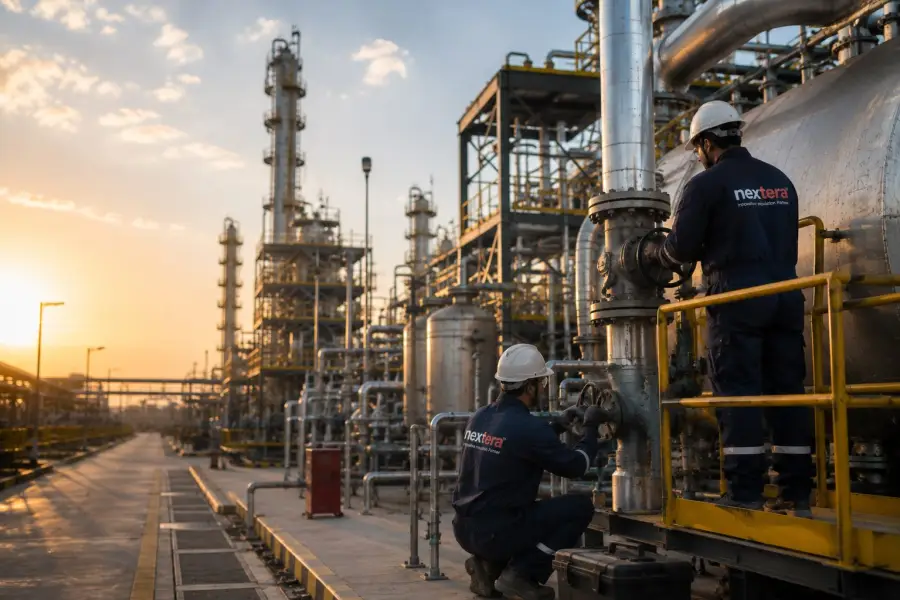
Nextera Insulations supplies aluminium jacketing and cladding solutions for industrial and commercial applications, with options for different alloys, finishes and moisture-barrier requirements.
What Is Aluminium Jacketing for Insulation?
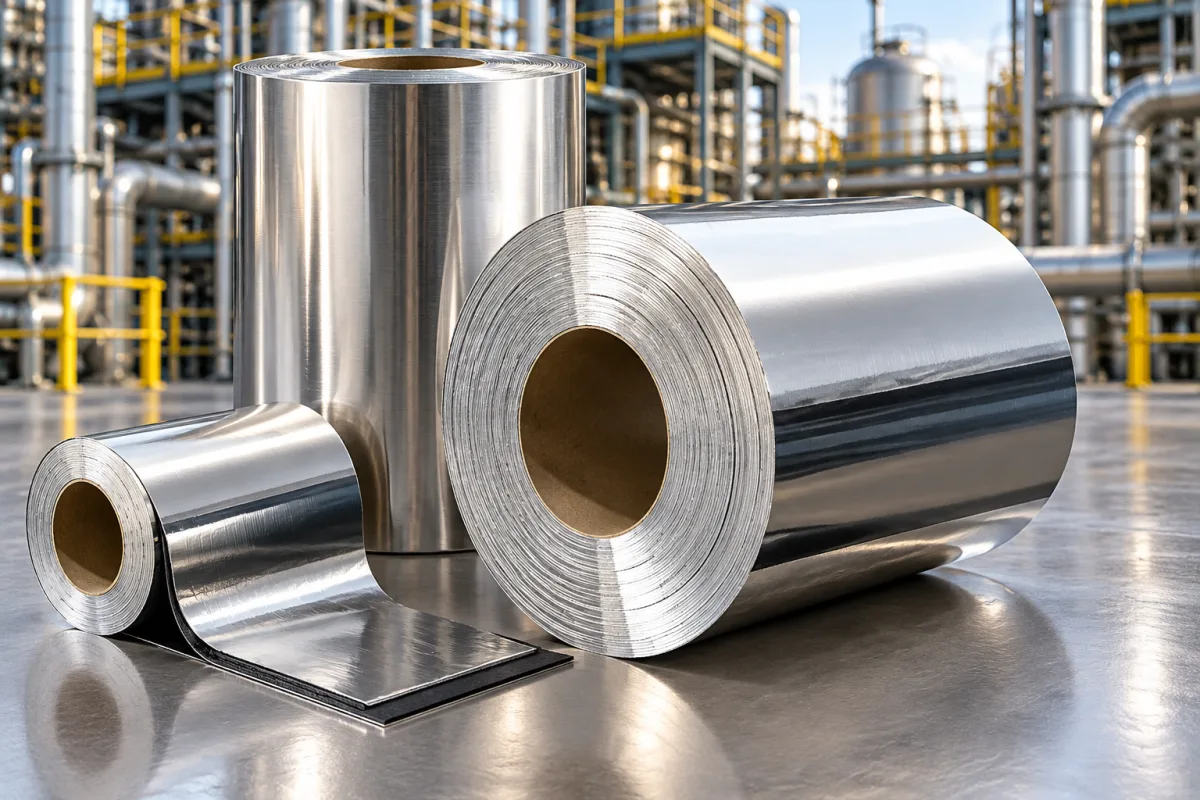
Aluminium jacketing is a protective metal covering installed over thermal insulation. It acts as the external layer of an insulation system, helping protect the insulation from rain, humidity, physical damage and other environmental conditions.
It is commonly used on insulated process pipelines, chilled-water lines, storage tanks, pressure vessels and HVAC ductwork.
Unlike the insulation material itself, aluminium jacketing is not primarily intended to provide thermal resistance. Its main purpose is to protect the insulation and support the durability of the overall system.
The performance of an installed system depends on several factors, including the insulation material, aluminium thickness, surface finish, joint design, moisture barrier and quality of installation.
Why Is Aluminium Jacketing Important in Industrial Insulation?
1. Protects Insulation from Weather Exposure
Outdoor insulation systems are exposed to rain, humidity, sunlight and changing weather conditions. Without suitable external protection, insulation can become wet or physically damaged.
Aluminium jacketing provides a protective outer covering that helps limit exposure to these conditions when correctly designed and installed. Properly formed overlaps, sealed penetrations and suitable joint arrangements are essential to prevent water ingress.
This makes aluminium jacketing a practical option for industrial facilities, external pipework and HVAC installations.
2. Helps Manage Corrosion Under Insulation (CUI)
Corrosion Under Insulation, commonly known as CUI, is a major maintenance concern in industrial facilities. It can occur when moisture reaches susceptible metal surfaces beneath insulation and creates conditions that promote corrosion.
Aluminium jacketing with a suitable moisture barrier can help reduce direct contact between the aluminium and the insulation and limit moisture-related risks.
However, a moisture barrier alone does not eliminate CUI. Correct material selection, effective joint sealing, suitable drainage, compatible system components and regular inspection remain important.
For facilities operating in humid, coastal or chemically aggressive environments, the complete insulation and cladding system should be evaluated against the project's service conditions.
3. Offers Lightweight and Practical Installation
Aluminium is relatively lightweight and formable, making it suitable for fabricating insulation covers for pipes, fittings, vessels and ductwork.
Its workability supports the production of different shapes and profiles, helping contractors cover straight sections as well as bends, elbows and other components.
The required sheet thickness and fabrication method should be selected according to the application, mechanical exposure and project specification.
4. Supports Long-Term Insulation Performance
Insulation is designed to control heat transfer and maintain the required operating temperature. When insulation becomes wet or damaged, its thermal performance can deteriorate.
By protecting insulation from external exposure, aluminium jacketing helps maintain the condition of the underlying insulation system. This can support reliable temperature control and help reduce avoidable maintenance.
The actual energy performance depends on the insulation material, thickness, thermal conductivity, operating temperature and installation quality. Aluminium jacketing should therefore be considered a protective component rather than a substitute for properly designed insulation.
Aluminium Jacketing Alloys: 3003 vs 3105
Aluminium alloy selection is an important part of insulation cladding specification. Different alloys offer different combinations of formability, strength and corrosion resistance.
Nextera Insulations lists aluminium jacketing in 3003 and 3105 alloys. The appropriate option depends on the application and specified material requirements.
Aluminium Alloy 3003
Alloy 3003 belongs to the aluminium-manganese family. It is known for its formability and corrosion resistance in many general applications. These properties make it useful for products that require forming and fabrication.
Aluminium Alloy 3105
Alloy 3105 is also an aluminium-manganese-based alloy commonly used in sheet applications. It offers a practical balance of formability and strength for applications such as cladding and coated sheet products.
The two alloys should not be treated as interchangeable in every situation. The final selection should consider the required mechanical properties, temper, thickness, forming requirements and environmental exposure.
For project-specific requirements, refer to the applicable product datasheet and material specification.
Types of Aluminium Jacketing Finishes
The surface finish influences the appearance and, depending on the product, can affect the handling and practical use of the jacketing.
Mill Finish Aluminium Jacketing
Mill finish aluminium has a standard unfinished metal surface. It is suitable for applications where a basic aluminium finish meets the project requirements.
Stucco Embossed Aluminium Jacketing
Stucco embossed aluminium features a textured surface. This finish is commonly selected for industrial cladding where a textured appearance is preferred and minor surface marks should be less noticeable.
Corrugated Aluminium Jacketing
Corrugated aluminium has a formed profile that provides additional stiffness compared with an otherwise similar flat sheet. It can be considered for selected large surfaces and industrial applications where the specified profile is suitable.
Pre-Painted Aluminium Jacketing
Pre-painted aluminium is supplied with a specified colour coating. It can be used when colour identification, architectural appearance or a particular project finish is required.
Finish selection should consider the operating environment, coating requirements, fabrication process and maintenance needs.
What Is Aluminium Jacketing with a Moisture Barrier?
A moisture barrier is a layer applied to the inner surface of aluminium jacketing to help separate the metal from the underlying insulation and limit moisture-related interaction.
Nextera lists Polysurlyn and Polykraft moisture-barrier options, subject to the product specification.
A moisture barrier can be particularly relevant where the insulation system is exposed to humidity, condensation risks or outdoor conditions. Its performance depends on barrier integrity, joint treatment, installation details and compatibility with the insulation system.
When specifying aluminium jacketing with a moisture barrier, consider:
- The operating and ambient temperatures.
- The type of insulation beneath the jacketing.
- The moisture-barrier material and its specified properties.
- Joint overlaps, penetrations and sealing arrangements.
- Exposure to rain, humidity, salt and chemicals.
- Inspection and maintenance requirements.
These factors help ensure that the selected jacketing system is suitable for the intended application. For a detailed comparison of barrier types, read our guide to moisture barriers in aluminium jacketing.
Applications of Aluminium Insulation Jacketing
Aluminium jacketing is used across several industrial and commercial sectors.
- Oil and Gas: Protects insulation on process piping, tanks and equipment, subject to the project's operating and environmental requirements.
- Petrochemical Plants and Refineries: Provides external protection for insulated process lines and equipment exposed to demanding industrial conditions.
- Power Generation: Used on suitable insulated piping, ducts and equipment to protect the insulation from external exposure.
- HVAC Systems: Covers insulation on air ducts and mechanical services in commercial and industrial buildings.
- Storage Tanks and Vessels: Provides a protective covering over specified insulation systems on suitable equipment surfaces.
- Marine and Offshore Facilities: Can be considered for selected applications where weather exposure and moisture control are important. Material compatibility and corrosion risks should be evaluated carefully in salt-rich environments.
The correct specification depends on the service temperature, exposure conditions, equipment geometry and applicable engineering requirements.
How to Select the Right Aluminium Jacketing for Your Project
Before ordering aluminium insulation cladding, engineers, contractors and procurement teams should confirm the following requirements. Our guide on how to choose insulation cladding material covers the wider selection process.
- Aluminium alloy: Confirm the required alloy, temper and applicable material specification.
- Sheet thickness: Select thickness according to pipe diameter, equipment geometry, mechanical exposure and project requirements.
- Surface finish: Determine whether mill finish, stucco embossed, corrugated or pre-painted aluminium is required.
- Moisture barrier: Assess whether a moisture barrier is needed and identify the specified type.
- Operating environment: Consider indoor or outdoor exposure, humidity, chemicals, coastal conditions and service temperature.
- Fabrication requirements: Identify pipe sizes, bends, elbows, tank dimensions and other components that require custom fabrication.
- Applicable standards: Confirm the required standards and documentation in the project specification.
ASTM C1729 covers material requirements for aluminium jacketing used with thermal and acoustical insulation above or below ambient temperature, in indoor and outdoor locations. Specifying material to a standard does not, by itself, guarantee the performance of the complete installed insulation system. The specified product and documentation should be checked against the project's requirements.
Aluminium Jacketing Solutions from Nextera Insulations
Nextera Insulations supplies aluminium jacketing and cladding for industrial insulation applications, including insulated piping, tanks, vessels and HVAC systems.
Available options listed by Nextera include:
- Aluminium alloys 3003 and 3105.
- Mill finish, stucco embossed and corrugated finishes.
- Pre-painted aluminium in specified colours.
- Aluminium jacketing with or without a moisture barrier.
- Polysurlyn and Polykraft moisture-barrier options.
Material selection should be based on the application, required dimensions, operating conditions and technical specification.
For industrial insulation projects in the UAE and other markets served by Nextera, the team can assist with product enquiries and quotation requirements.
Request an Aluminium Jacketing Quote
Planning an industrial insulation project? Contact Nextera Insulations to discuss your aluminium jacketing requirements.
- Product page: Aluminium Jacketing & Cladding
- Request a quote: Get a Quote
- Email: sales@nexterainsulations.com
- Phone: +971 4 2633071
Share your required alloy, thickness, finish, moisture-barrier preference, dimensions and delivery location to help the team assess your enquiry.
Choose aluminium jacketing according to your project's technical requirements to support effective insulation protection and long-term system reliability.